Tastes like sugar
Clean, quick sweetness without the bitter aftertaste some sweeteners leave.
The rare sugar that tastes and behaves like sugar, with about one tenth of the calories. Ideal for creating no-added-sugar products without giving up flavor or texture.
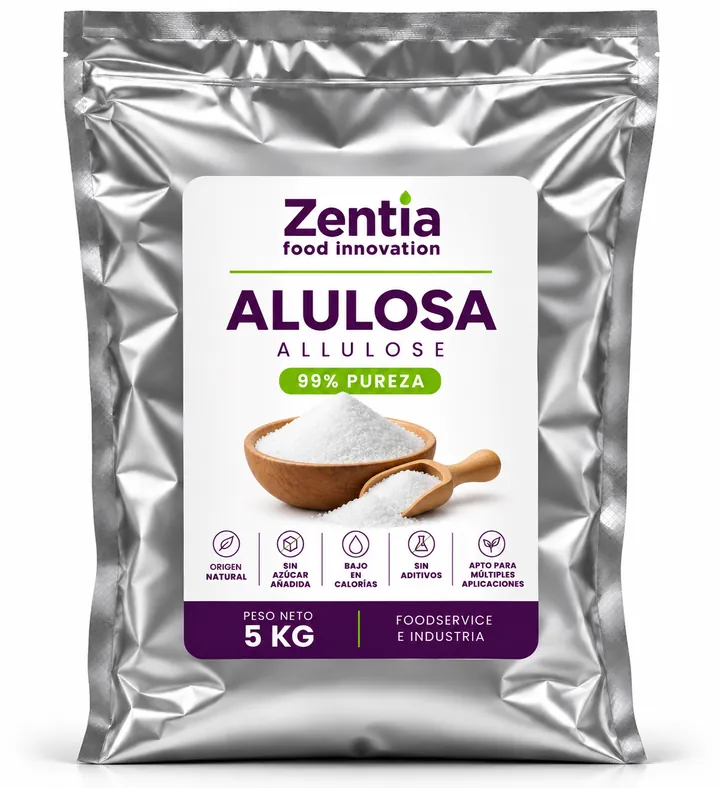
Allulose (also called D-psicose) is a sugar found naturally in small amounts in foods such as figs, raisins and maple syrup. Its structure is very similar to fructose, which is why it tastes and works like sugar in recipes.
The difference is how the body uses it: most of it is not metabolized for energy, so it provides very few calories. In the United States, the FDA allows it to be counted at 0.4 kcal per gram and excluded from total and added sugars on the Nutrition Facts label.
Stevia is great for sweetening, but it is a high-intensity sweetener: it is used in tiny amounts and adds no body, color or texture. Allulose is a real sugar with very few calories that does all of that.
Reference values from technical literature and the US FDA labeling guidance. Stevia sweetness depends on the extract. In Colombia, label claims are governed by INVIMA and Ministry of Health regulations.
Clean, quick sweetness without the bitter aftertaste some sweeteners leave.
Around 0.4 kcal/g compared with 4 kcal/g for regular sugar.
Takes part in the Maillard reaction, so breads, cookies and cakes get color and aroma.
Lowers the freezing point like sugar and helps prevent ice crystals.
High solubility for drinks, syrups, sauces and fillings.
Combined with stevia or monk fruit you get more sweetness with the texture of sugar.
To match sweetness, use about 1.3 g of allulose for every 1 g of sugar, or add a touch of stevia.
It browns faster in the oven: lower the temperature by 10 to 15 °C or cover the product towards the end of baking.
It retains moisture: products stay softer; adjust baking times if you want a crisp texture.
Start gradually: like other low-absorption sugars, large amounts may cause digestive discomfort in some people.
Ask us for the full technical data sheet with batch analysis and specifications for your formulation.
Request data sheetNo. Stevia is a high-intensity sweetener used in very small amounts. Allulose is a very low-calorie rare sugar that, besides sweetening, adds bulk, color and texture like sugar.
Since it has about 70% of the sweetness, use about 1.3 g of allulose per gram of sugar. If you do not want to increase the amount, combine it with a little stevia or monk fruit.
Yes. It browns and caramelizes in the oven. Because it browns faster than sugar, lower the temperature slightly.
Yes, it is one of its best uses: it helps keep ice cream creamy and easy to scoop.
You can buy it on Nattuo at volume prices, or contact us for a direct quote. The minimum order is one 5 kg bag and we ship across Colombia.
Sources: US FDA, Guidance for Industry on the declaration of allulose and calories from allulose on Nutrition Facts labels (October 2020); ingredient manufacturers’ technical sheets. This is technical information and does not replace advice from a health professional.
{{ t.lead }}
{{ t.what1 }}
{{ t.what2 }}
{{ t.cmpText }}
{{ t.cmpNote }}
{{ b.d }}
{{ tp.t }} {{ tp.d }}
{{ q.a }}
{{ t.sources }}